
When Does Plasma Catalysis Even Need a Catalyst?
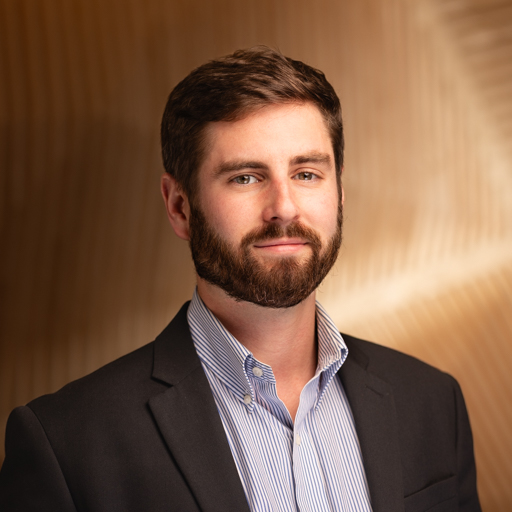
Prof. Dayne Swearer
Northwestern University
Join us IN PERSON ONLY at:
DoubleTree by Hilton Hotel
9599 Skokie Blvd, Skokie, IL 60077
Abstract
Nonthermal plasmas can activate stable molecules such as N2 or CH4 before they ever encounter a catalytic surface, raising a fundamental question: what does a catalyst actually do in a plasma? Once a gas discharge is introduced into a chemical reactor, adding even an apparently inert material (or the electrode itself) can alter far more than surface reaction kinetics. A catalyst can alter discharge physics, modify heat transfer, and quench excited-state species, changing conversion and selectivity without heterogeneous surface chemistry contributing in the conventional sense. This talk will examine when catalysts are, and are not, needed to control plasma-driven chemistry. Drawing on examples from my laboratory on selective methane oxidation and nitrogen fixation chemistry, I will discuss how plasma-generated species interact with catalytic interfaces across multiple time and length scales. Unlike thermal catalysis, which is governed largely by ground-state reactants and thermally populated surface intermediates, plasma catalysis exposes materials to nonequilibrium fluxes of radicals, ions, excited molecules, and metastable species. The catalyst’s role is therefore not simply to lower an activation barrier, but to capture and redirect short-lived intermediates before they relax, recombine, or react elsewhere. As plasma catalysis gains more attention as an electrified chemical technology, we need mechanistic frameworks to determine when a plasma process needs a catalyst and how that catalyst should function.
Bio
Dayne Swearer is an Assistant Professor in the Departments of Chemistry and Chemical & Biological Engineering at Northwestern University. He earned his Ph.D. from Rice University and completed his postdoctoral training at Stanford University. At Northwestern, he leads an interdisciplinary research program investigating nonequilibrium chemical processes driven by light and electricity to advance industrial decarbonization and the electrification of chemical manufacturing. He has authored more than 45 peer-reviewed articles and is a co-inventor on seven patent families, including technology licensed to Syzygy Plasmonics. His early-career honors include a Packard Fellowship for Science and Engineering, a Breakthrough Energy Explorer Fellowship, an AFOSR Young Investigator Award, an ARO Early Career Award, a 3M Non-Tenured Faculty Award, and the ACS Unilever Award for Outstanding Young Investigator in Colloid and Surfactant Science. In 2025, Chemical & Engineering News named him to its Talented 12 cohort.

