
Elucidating the intricacies of electrocatalysis – when thermal catalysis can be a guide, and when other principles are needed
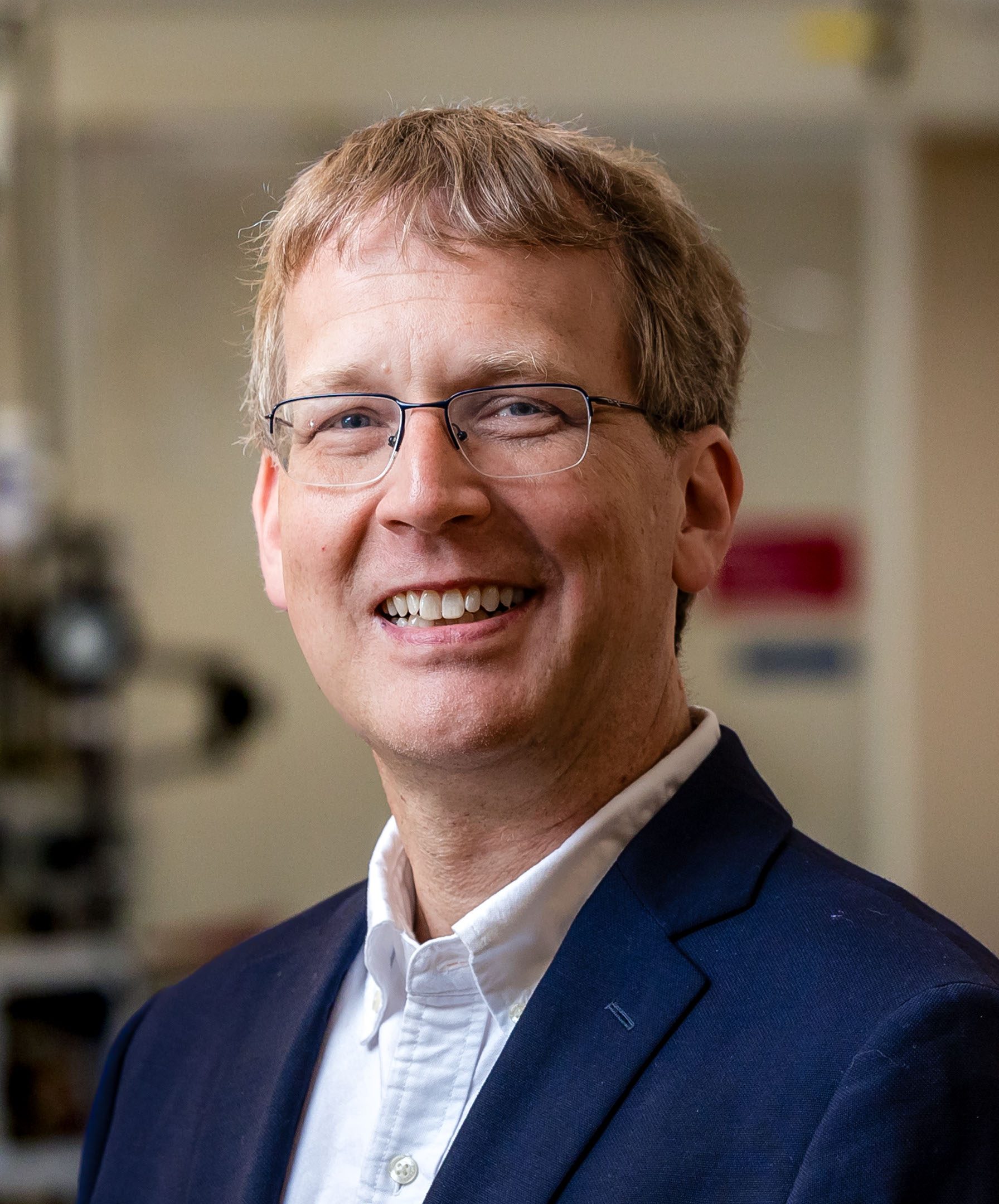
Prof. Jeff Greeley
Department of Chemical and Biological Engineering
University of Wisconsin, Madison
Join us IN PERSON ONLY at Maggiano’s Little Italy in Skokie, IL
(4999 Old Orchard Ctr. Ste. A28, Skokie, Illinois, 60077)
Abstract
The field of electrocatalysis, where reactions are driven by potential gradients, has historically been largely separate from traditional studies of temperature-driven heterogeneous catalysis. This separation has led to the development of disparate concepts of catalytic reactivity and distinct methods of kinetic analysis. Nevertheless, the two fields share many core concepts, ranging from the centrality of adsorbate-surface bonding to the use of microkinetic theories to model catalytic rates and selectivities. In recent years, both computational and experimental efforts have developed to leverage knowledge from both fields to enhance fundamental understanding of heterogeneous catalytic processes.
In this talk, I will provide a computational perspective on how concepts from thermally-driven catalytic studies may be combined with electrochemical theories to accelerate understanding of both fields. I will start with a broad discussion of different classes of elementary chemical reactions. Using results from my own research and literature, I will argue that certain types of reactions, such as C-C bond scission, are only indirectly sensitive to the electrocatalytic environment and may be reasonably analyzed using traditional approaches from thermal catalysis. In contrast, other processes, involving bonds that strongly hydrogen bond with aqueous electrolytes, as well as reactions that require significant reorganization of the electrolyte molecules, must be studied with electrochemical principles firmly in mind. Even in these cases, however, a proper understanding of the electrochemical environment often permits surprisingly simple interpretations of the reaction kinetics that emerges.
Using the above concepts, I will illustrate how different types of electrocatalytic processes, ranging from oxygen reduction to ethanol electrooxidation, can be analyzed to understand key kinetic features such as rate-limiting steps, most abundant surface species, and reaction orders, and I will discuss how the resulting insights can be used for screening and development of novel electrocatalysts. I will close by briefly discussing how another key feature of catalyst performance – stability – can differ dramatically between electrochemical and thermal environments and how this concept must be rigorously accounted for if electrocatalysts of practical utility are to be found.
Bio
Prof. Jeffrey Greeley obtained his PhD from the University of Wisconsin-Madison in 2004. Following two years of postdoctoral work at the Technical University of Denmark, he moved to Argonne National Laboratory, where he served for six years as a staff scientist in the Center for Nanoscale Materials before joining the Davidson School of Chemical Engineering at Purdue University in 2013. He returned to UW-Madison in 2025 and is currently the Paul Elfers Professor of Chemical and Biological Engineering.
Professor Greeley’s research group at Wisconsin focuses on the use of first principles Density Functional Theory calculations to understand chemical processes at surfaces and interfaces. His primary interests are in the areas of heterogeneous catalysis and electrocatalysis, and his work has led to the prediction and successful testing of improved heterogeneous catalysts and electrocatalysts for reactions of interest in fuel cells, electrolyzers, and related devices. His work has led to the publication of over 200 research articles with tens of thousands of citations. In addition to his research activities, he leads curriculum development efforts at UW and serves on the leadership and review board of the ACS Petroleum Research Fund.

