
Metal-Support Cooperativity in Surface Organometallic Catalysis
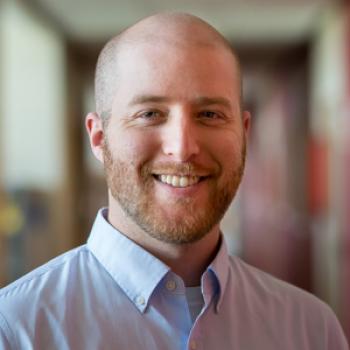
Dr. David Kaphan
Catalysis Group, Argonne National Lab
Join us IN PERSON ONLY at:
DoubleTree by Hilton Hotel
9599 Skokie Blvd, Skokie, IL 60077
Abstract
Chemisorption of organometallic complexes on inorganic supports is a powerful strategy for rational catalyst design and for generating model systems for the controlled study of phenomena such as Electronic Metal-Support Interactions (ESMI) in heterogeneous catalysis. While traditional surface organometallic catalysis on inert oxides can afford highly reactive, homogeneous-in-function heterogeneous catalysts, the intrinsic role of the surface as an inner sphere ligand in modulating catalyst reactivity is often under-appreciated and under-leveraged. In this work organometallic molecular precursors are employed to functionalize a variety of surfaces beyond typical supports in surface organometallic catalysis. Redox active materials inspired by Li-ion battery cathodes and anodes such as lithium manganese oxide (LixMn2O4) and lithium titanate (LixTiO2) are employed as catalyst supports for which the electronic properties of the active site can be continuously modulated as a function of the degree of lithium intercalation into the support, resulting in rationally tunable catalysts for a variety of transformations. These systems also offer a high degree of synthetic control in the generation of model catalysts for the study of EMSI effects. This approach is explored in a variety of catalytic model reactions including selective oxidations, hydrogenation reactions, and olefin trimerization, all of which are responsive to modulation of the global redox state of the catalyst material, and evidence “redox non-innocent” surface behavior observed. These studies reveal a complex interplay between bond forming elementary steps at the active site and redox interactions with the surface, both of which are dependent on electronic communication between the surface and active site and can be modulated a function of surface lithiation. Additional examples of metal-surface cooperativity in non-traditional surfaces will also be discussed.
Bio
Dr. Kaphan obtained his BS from the University of Rochester and his PhD from the University of California, Berkeley. He is a Chemist in the Catalysis Group in the Chemical Sciences and Engineering Division at Argonne National Laboratory. David’s research concerns fundamental studies in supported organometallic catalysis, carbon dioxide utilization, chemical recycling of polymer waste, and field-responsive non-equilibrium catalyst systems. His primary area of research in supported organometallic catalysis focuses on understanding stereoelectronic communication between organometallic complexes and inorganic support materials can be leveraged to modulate reactivity and the development of non-traditional functional materials as catalyst support frameworks.
 Catalysis Club of Chicago