
NO Where to Go
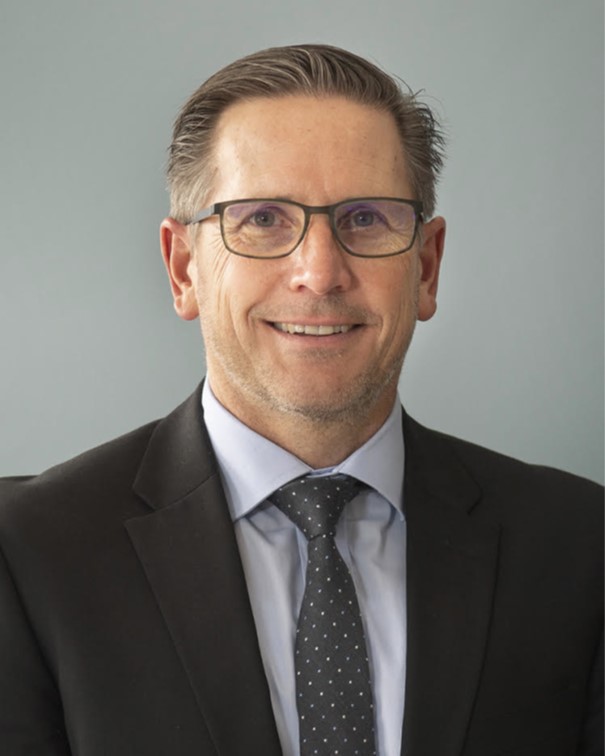
Professor William F. Schneider
Chair – Department of Chemical and Biomolecular Engineering
University of Notre Dame
Join us IN PERSON ONLY at:
Maggiano’s Little Italy
4999 Old Orchard Shopping Ctr Suite A28
Skokie, IL 60077
Abstract
Nitric oxide (NO) is deleterious to the environment and human health, and as a result interest in catalytic remediation of NO has a long and rich history. While decomposition to N2 and O2 is conceptually elegant, evidence shows that it is practically unattainable. Rather, selective catalytic reduction (SCR) of NO with NH3 over Cu-exchanged zeolites is the catalysis of practice. Here we take a look at SCR through a fundamental, computation-informed lense. We show why a Cu-zeolite is uniquely suited to catalyze SCR, how zeolite structure, catalyst composition, and reaction conditions intersect to create a microscopically dynamic catalytic site, how those dynamics are central to catalytic turnover, how the intrinsic chemistry of NO ultimately limits SCR selectivity, and ultimately how computational models are an essential partner to experiment in disentangling a rich catalytic system.
Bio
Bill Schneider’s expertise is in chemical applications of density functional theory (DFT) simulations. After receiving his Ph.D. in Inorganic Chemistry from the Ohio State University, he began his professional career in the Ford Motor Company Research Laboratory working on the environmental impacts of automobile emissions. At Ford he developed an interest in the catalytic chemistry of NOx for diesel emissions control, and he has published extensively on the chemistry and mechanisms of NOx decomposition, selective catalytic reduction, trapping, and oxidation catalysis. In 2004 he joined the Chemical and Biomolecular Engineering faculty at the University of Notre Dame as an Associate Professor. At Notre Dame he has continued his research into the theory and molecular simulation of heterogeneous catalysis, with particular emphasis on reaction environment effects on catalytic materials and their implications for mechanism and reactivity. He was named an endowed chair in 2016 and Chair of the Department of Chemical and Biomolecular Engineering in 2020. He has co-authored more than 210 papers and book chapters, is a Fellow of the American Association for the Advancement of Science and the American Chemical Society, is an Executive Editor of The Journal of Physical Chemistry, has served as chair the Catalysis Science and Technology Division of the American Chemical Society, and was the 2018 recipient of the Giuseppe Parravano Award of the Michigan Catalysis Society.
 Catalysis Club of Chicago