
Case Studies in Electrocatalysis and Advanced Adsorbents from the Materials Discovery Research Institute
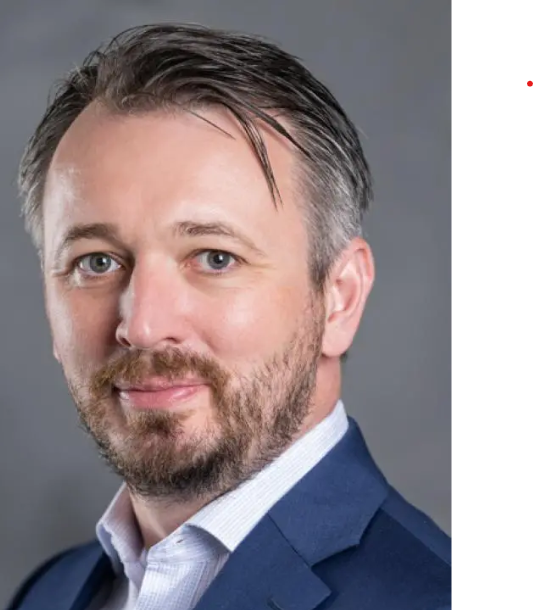
Dr. Stuart Miller
Vice President
UL Research Institutes – Materials Discovery Research Institute
Join us IN PERSON ONLY at:
DoubleTree by Hilton Hotel
9599 Skokie Blvd, Skokie, IL 60077
Abstract
Materials discovery is shifting to meet urgent needs in the energy transition, manufacturing resilience, safety, and sustainability. Despite rapid growth in automation, high-throughput experimentation, and AI, many programs still struggle to convert experimental speed into faster, trustworthy decisions because of fragmented analytics, inconsistent metadata, and late consideration of real-world constraints.
Launched in September 2024 within UL Research Institutes, the Materials Discovery Research Institute (MDRI) implements a decision-driven, digital-first model that links synthesis, characterization, analytics, and engineering into continuous workflows. Automated platforms produce comparable, traceable material libraries while standardized, high-throughput characterization and decision-ready analytics enable rapid benchmarking, prioritization, and down-selection. AI is applied as an enabling layer to improve comparability, ranking, and navigation across large compositional and process spaces rather than as a standalone solution. Safety, sustainability, and manufacturability constraints are embedded early to reduce downstream risk and increase deployability.
MDRI is also developing engineering infrastructure this year to enable work at higher technology readiness levels. By building dedicated engineering and prototyping capabilities in parallel with discovery automation, the institute can validate materials under application-relevant conditions, establish feedback loops from prototype performance back into discovery, and accelerate maturation toward demonstration systems.
This presentation will describe MDRI’s organizational model, digital–physical infrastructure, and first-year results, including internally developed tools and workflows that improve iteration speed and decision quality. Case studies in electrocatalysts and advanced adsorbents will show how systematic library generation, rapid screening, and decision-ready analytics accelerate down-selection while preserving durability and scale considerations, and how structured discovery–engineering loops map structure–property relationships to application constraints. Together, these early results illustrate how a safety-informed, institutionally grounded model can convert automation and AI investments into faster, more reliable pathways from materials innovation to real-world impact.
Bio
From Cardenden, Scotland, Stuart graduated with a degree in Chemistry from the University of Dundee followed by a Ph.D. in Materials Chemistry from the University of St. Andrews (2006), Scotland. During his Ph.D., Stuart’s research work focused on the pursuit of novel scandium-based open framework materials; enabling him to develop a passion for material synthesis and characterization. Stuart stayed in St. Andrews to complete a postdoctoral research fellow (2006 – 2008) working as part of a large European project focused on the design and synthesis of porous materials for carbon capture (CO2 and CH4), before moving to work as a postdoctoral fellow at the University of Versailles (UVSQ), France. During his time in Versailles, Stuart was responsible for research into the high throughput synthesis and characterization of Metal Organic Frameworks (MOFs) which were designed to adsorb drug molecules to enable enhanced drug delivery systems. Stuart was appointed within the Centre National de la Recherche Scientifique (CNRS) as Chargé de Researche in 2010. In 2011, Stuart joined the New Materials group within Honeywell UOP in Des Plaines, IL. During his time at Honeywell, Stuart worked on a variety of technologies from fundamental aspects of research through to leading development teams focused on product commercialization. In 2022, Stuart joined Underwriters Laboratories Research Institutes and established the Materials Discovery Research Institute, a state-of-the-art materials science laboratory which focuses on accelerated materials discovery to provide novel solutions in global challenges such as renewable energy generation and storage, water harvesting and purification and carbon capture technologies.
Stuart is the inventor over 35 US patents with several other patent applications or provisional applications currently under review. He has 26 publications in peer-reviewed journals.
Outside of work – Stuart is married to Brigitte and together they have 3 children, Nathan (13), Jessica (10) and Matthieu (8) and a dog (Bella, 5).
 Catalysis Club of Chicago