
Chemical Recycling and Upcycling of Polyolefin Waste
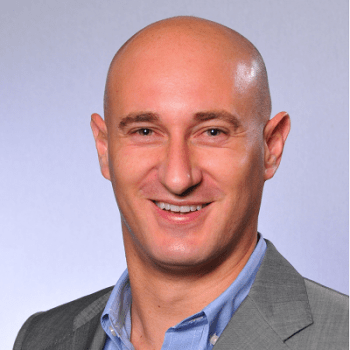
Dr. Massimiliano “Max” Delferro
Argonne National Laboratory
Join us IN PERSON ONLY at Ten Mile House in Evanston
Click HERE to RSVP.
(1700 Central St, Evanston, IL 60201)
Abstract
Polymers are irreplaceable in the global economy, with myriad uses in packaging, construction, transportation, electronics, and healthcare industries. The choice to use plastics, instead of other materials, is expedient because they are lightweight, strong, and chemical resistant, with a variety of properties enabled by their molecular and macromolecular structures. However, their massive-scale manufacture, single-use function, and long environmental lifetimes have created a crisis of plastics waste, with neg. impacts on human and animal health, disruptions to ecosystems, and underutilization of our carbon-based natural resources. Unfortunately, conventional mechanical recycling methods are limited by considerable technol. and economic challenges. Chemical upcycling, defined as selective conversion of waste into products with higher value than the virgin material, is an emerging alternative to classical recycling methods. Converting polyolefin plastics into chemicals and materials with desirable properties requires the ability to break inert carbon-carbon (C-C) bonds in the long chains of chemical indistinguishable repeat units at regularly spaced intervals and to introduce functionality into the products. We are creating abiotic, robust, selective multifunctional inorganic catalytic architectures to achieve such cleavage reactions, producing fragments with a narrow range of chain lengths. We have also discovered new transformations of polyolefins into recyclable lubricants, degradable surfactants, and re-polymerizable macromonomers. Synergy between experts in inorganic and polymeric materials crosscuts our expertise in molecular-scale and heterogeneous catalysis, creating multi-disciplinary collaborative projects to achieve the goals.
Bio
Massimiliano “Max” Delferro is a chemist and group leader of the Catalysis Science Program in the Chemical Sciences and Engineering Division and initiative leader for “Science for a Circular Economy” at Argonne National Laboratory. His work focuses on the chemical recycling of plastics and the development of supported earth-abundant single-site catalysts for C-H and C-C transformation. He is the Deputy Director of the “Institute for Cooperative Upcycling of Plastics” (iCOUP), an Energy Frontier Research Centers funded by the U.S. Department of Energy, and Senior Scientist in the Pritzker School of Molecular Engineering (PME) at University of Chicago.
Education and Training
Ph. D. University of Parma (Italy), Inorganic and Organometallic Chemistry, 2008
M. S. University of Parma (Italy), Inorganic and Organometallic Chemistry, 2005
B. S. University of Parma (Italy), Inorganic Chemistry, 2003
Research and Professional Experience
Group Leader, Catalysis Science Program, Argonne National Laboratory 2016-present
Leader, Science for a Circular Economy Initiative, Argonne National Laboratory 2021-present
Deputy Director, EFRC-Institute for Cooperative Upcycling of Plastics 2020-present
Research Associate Professor, Northwestern University 2013-2016
Research Assistant Professor, Northwestern University 2010-2013
Postdoctoral Fellow, Northwestern University 2009-2010
 Catalysis Club of Chicago