
How machine learning is changing the way we discover new electrochemical materials
Prof. Taylor D. Sparks – Twitter YouTube LinkedIn
Materials Science & Engineering
University of Utah
DoubleTree by Hilton Hotel
9599 Skokie Blvd, Skokie, IL 60077
Abstract
Crystal structure prediction has long fascinated scientists. There has been intense investigation over the last century ranging from simplistic rules to data-driven predictions and, most recently, generative artificial intelligence tools developed by academics and now deployed at scale by private companies like DeepMind. In this talk, I describe the traditional approach for new materials discovery with a case study in zirconia gallate rutile system as an example of a sodium ion conductor. Then, I will describe how machine learning has supplemented and, in some cases, replaced traditional approaches. I will compare generative models including variational autoencoders, generative adversarial networks, and diffusion models and describe new efforts to condition these models to achieve inverse design of new crystal structures. I’ll give specific examples of our xtal2png and CrysTens representations and our machine learning contributions to greatly accelerate the Flexible Unit Structure Engine (FUSE) software package.
Bio
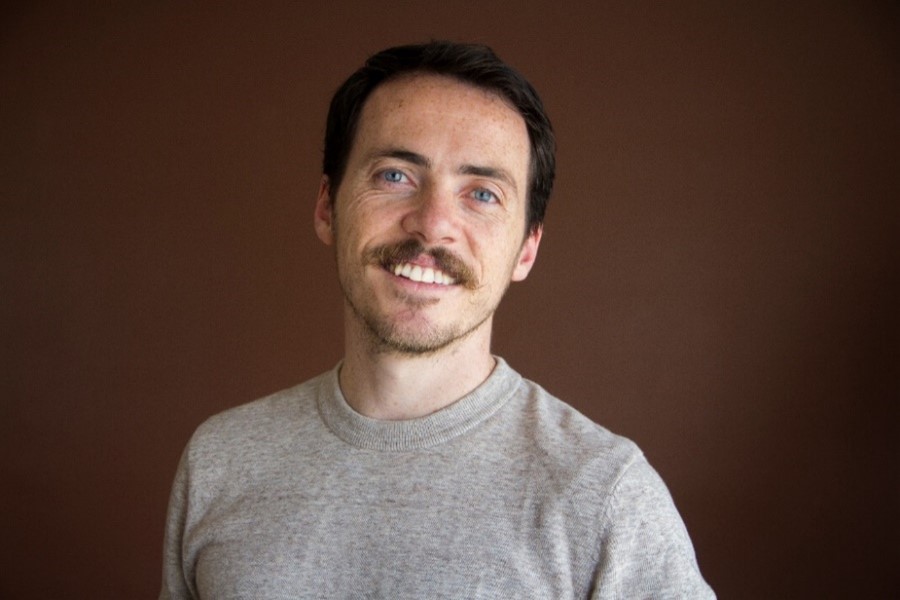
Dr. Sparks is an Professor of Materials Science and Engineering at the University of Utah and recently completed a sabbatical at the University of Liverpool with support from the Royal Society Wolfson Visiting Fellow program. He holds a BS in MSE from the UofU, MS in Materials from UCSB, and PhD in Applied Physics from Harvard University. He was a recipient of the NSF CAREER Award and a speaker for TEDxSaltLakeCity. He is active in MRS, TMS, and ACERS societies and has served as an Associate Editor for the journals Computational Materials Science and Data in Brief. He is the Editor-in-Chief elect for the Integrating Materials and Manufacturing Innovation When he’s not in the lab you can find him running his podcast “Materialism,” creating materials educational content for his YouTube channel, or canyoneering with his 4 kids in southern Utah.
 Catalysis Club of Chicago