
Synthetic advances to enable design of heterogeneous catalytic materials to enable biomass upgrading and fine chemical production
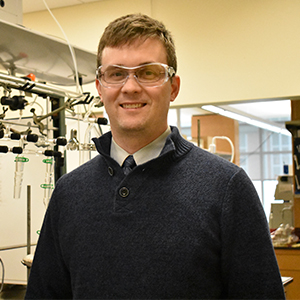
Professor Nicholas Brunelli
Department of Chemical and Biomolecular Engineering
The Ohio State University
Elements By The Odyssey
16235 LaGrange Rd
Orland Park, IL 60467
Abstract
Heterogeneous catalytic materials have enabled production of valuable materials and products that have transformed society. The catalytic reactions span a range of chemistry that can be catalyzed by Bronsted acids, Lewis acids, or metals. Yet, it is often difficult to pinpoint the structure of the catalytic site in heterogeneous catalysts, affecting the catalyst performance. The key challenge is to create highly active, selective, and stable catalytic materials. For heterogeneous catalytic materials, it is exceedingly challenging to establish synthesis-structure-reactivity relations since these materials have multiple different types of sites. If we can identify synthesis-structure-reactivity relationships, we can unlock a range of catalytic chemistry through developing highly active and selective catalytic materials. In this presentation, we will examine different types of catalytic materials and the different spectroscopic and catalytic testing methods that are used to describe the catalytic site. We will discuss the rich and complex behavior of Lewis acid zeolites for a range of chemical reactions. These materials will be characterization using advanced spectroscopy methods and catalytic testing to elucidate the structure of the catalytic site. The insights from these tests will be used improve the design of the catalytic material to produce uniform and highly active catalytic sites. In addition, we will discuss the synthetic challenge of producing uniform metal nanoparticles. We will discuss our work to produce uniform nanoparticles using jet-mixing reactors. Overall, our results contribute to the fundamental understanding of how catalytic material can be designed, synthesized, and characterized to advance sustainable chemical processes.
Bio
Nicholas Brunelli is a Professor in the William G. Lowrie Department of Chemical and Biomolecular Engineering (CBE) at The Ohio State University. He received his undergraduate degree in CBE from Ohio State University (2004) and his doctoral degree in Chemical Engineering from the California Institute of Technology (2010) supported by a National Science Foundation Graduate Research Fellowship (NSF GRFP). Dr. Brunelli was advised by Professor Konstantinos Giapis, where he worked on nanomaterial synthesis using plasma techniques. Prior to joining the faculty at Ohio State, Dr. Brunelli worked as a postdoctoral researcher at Georgia Tech with Professor Chris Jones and at Emory with Professor Huw Davies where he developed a keen interest in heterogeneous catalytic materials that use advanced organic synthetic techniques.
Since joining the faculty as an assistant professor at Ohio State in 2014, Dr. Brunelli has been promoted to associate professor in 2020 and professor in 2024. From 2018 to 2023, he was named the H.C. “Slip” Slider Professor. In 2023, he became the Ervin G. Bailey Endowed Chair in Energy Conversion. Dr. Brunelli’s current research program focuses on controlled synthesis of materials to create new materials and to elucidate structure-function behavior in the field of catalysis. This research has been recognized with the 2018 ACS Influential Researcher Award, the 2019 Robert Augustine Award, 2019 AIChE Futures, 2020 Emerging Investigator for RSC Molecular Systems Design and Engineering, 2021 Emerging Investigator by Energy and Fuels, 2025 Harrison Faculty Award for Excellence in Engineering Education, and the National Science Foundation CAREER Award (2017). He has also been recognized by Ohio State Institute of Materials Research for the Most Invention Disclosures Filed (2017). In 2024, his teaching was recognized with the Charles Ellison MacQuigg Award for Outstanding Teaching and the David C. McCarthy Engineering Teaching Award.
 Catalysis Club of Chicago